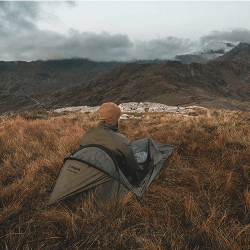
This month, our technical article explores Understanding Heat Loss, Insulation and Hypothermia, invaluable reading for anyone spending any time outdoors at any time of year.
It covers in detail hypothermia, thermodynamics and all aspects of heat loss and ‘feeling cold’, expanding on this to discuss the benefits of making informed choices regarding insulated clothing systems and emergency preparedness.
The article includes pointers for a timely and accurate diagnosis of different types of hypothermia and action points for when the worst happens, including the limitations of conventional solutions when aiding a hypothermic casualty.
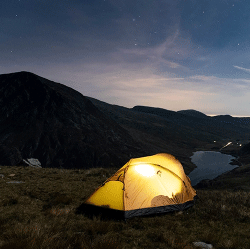
Spending time outdoors, including low-level walking and more technical ventures on hills and mountains, regardless of the season, can pose a direct risk of hypothermia to the unprepared individual. Being equipped with the correct clothing for your planned venture is a valuable skill, and understanding the benefits of appropriate insulation is essential before you head out. Regardless of the cause and severity of hypothermia, it can rapidly become life-threatening.
Thermodynamics defines the elements of heat and temperature, as well as their relationship to energy and work. Heat is a form of thermal energy and therefore has specific characteristics that need to be understood in order to effectively combat the cold when walking outdoors. Some of these characteristics are easy to understand, while others are slightly more surprising.
To begin with, we need to know that the body requires a constant supply of fuel, in the form of carbohydrates, to function properly. If we increase the amount of work we do, such as walking, climbing, or mountaineering, then the amount of fuel we need will increase proportionally. Think of this like a car’s engine; the faster you go, the quicker you use fuel. Then, as a result of burning more fuel, more energy is created, and your body starts to generate more heat.
Your core body temperature plays an integral part in all of your body’s systems and is essentially a product of your metabolism —the way the body converts fuel (food).
This is where the Laws of Thermodynamics come into play: All bodies that contain more energy than their surrounding environment will lose heat at a constant rate until they reach a temperature equilibrium with that environment.

You've just made a cup of coffee, but you need to make a phone call that will last 5 minutes. You want your coffee to be as warm as possible when you return. Do you a) Put the milk and sugar in now, or b) Leave the coffee with the hot water on its own?
Surprisingly, the answer is to put the colder milk and sugar into the coffee before making the phone call. When you return, it will be hotter (containing more energy) than the coffee made with hot water. This displays one of the most important elements of understanding heat loss and insulation.
This is one of the most protective elements of the human body. Hyperthermia, having a core body temperature higher than normal, will kill you much faster than hypothermia. So, you need to be able to lose heat quicker when you are hot, compared to gaining warmth when you are cold.
With your cup of coffee, adding milk reduces the overall temperature slightly, meaning that the coffee itself will lose heat at a slower rate, and you have changed the rate of equilibrium. By adding sugar to the mix, you have essentially insulated the liquid. The sugar absorbs some of the heat from the water, resulting in a slower rate of equilibrium. This is called Sensible and Latent Heat. Sensible heat is energy that can be measured with a thermometer. Latent heat is a form of energy that cannot be measured.
The easiest way to combat this form of rapid heat loss is to insulate yourself against the surrounding environment; this leads us to one of the most misunderstood elements of clothing in the outdoor world. Insulation does not keep you warm! Insulation inhibits the transfer of heat energy to the surrounding environment in both directions. Insulation will slow down heat loss, but also slow down heat absorption.
Let's go back to our cup of coffee and place it in an insulating flask. An Insulating Flask, such as a branded Thermos® Flask, will keep hot things hot and cold things cold! It prevents the absorption or loss of heat energy and reduces the process of thermodynamic equilibrium. It's essential to understand this principle, especially when you're cold. We need to achieve a layering effect with our clothes to maintain a constant, warm environment, so that we are neither too hot nor too cold.

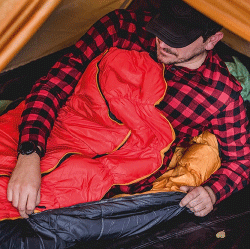
Snugpak Softie® Synthetic Insulation traps warm air between the microfibres, creating a layer of warm air that prevents heat loss. A distinction needs to be made here: When you are getting ready to head outdoors, if you are already feeling ‘warm’ before you start to exercise, then you have too many layers on, and will rapidly overheat - this will cause you to sweat, and lose heat rapidly when you stop, exacerbating hypothermia and making you a lot colder, quicker.
Ideally, you should not feel the cold, but you also shouldn't feel too warm or hot. Many people overheat and become cold because they are not wearing effective insulation layers, and then overcompensate by wearing too many layers, which can cause overheating. Remember, once you overheat, you will lose that heat quickly, which can cause hypothermia.
Start with a suitable base layer, such as the Snugpak 2nd Skinz Coolmax Long Sleeve Top, and quality socks as well. We feel the cold less on our legs because of the muscle layers around our thigh bones, compared to our arms and chest. However, 2nd Skinz Coolmax Long Johns may help in severe weather.
Suitable gloves and a warm hat may also be required. Now we have an appropriate layer that helps wick moisture, and can help trap warm air as we exercise, keeping us dryer for longer, we now need to select our main insulating layer from the Snugpak Range; there are three distinct thickness of Softie® Premier Insulation: with weights of 3, 6 and 9 Fills.
When purchasing Snugpak insulating clothing, consider adding mid-layers and the type of environment you'll be operating in. Too many people buy items of clothing that make them too hot, and then lose the benefits of both insulation to keep them warm and an item's ability to lose heat energy when required. Only you will know how hot you get when you are out.

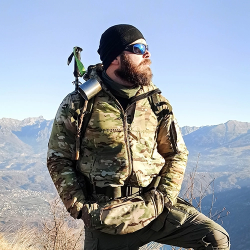
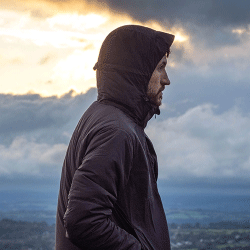
The Tactical Softie® Smock is ideal for inclement weather in sub-zero conditions, such as those found in Scottish Winter Mountaineering. A personal favourite is the Original Sleeka Jacket, which served the author well during military operations in the Balkans, including Kosovo and Bosnia, in the winter months, with space for fleece layers underneath. For low-level walks or during spring and autumn months, an SJ3 jacket may be better suited than a thicker insulating layer.
The ‘Oxford Medical Dictionary’ defines Hypothermia as an “accidental reduction of [core] body temperature below the normal range in the absence of protective reflex actions”; the normal body temperature range is between 36.0℃ and 37.0℃, and Hypothermia is defined as a core body temperature of below 35.0℃. There are five key methods by which the body loses heat, and understanding the effects of each will help stave off hypothermia:
Thermal energy is lost through radiation from all over your body. But of all factors, this is the one element in which you can protect yourself by wearing suitable insulation clothing appropriate for your venture, the time of year, and prevailing weather conditions.
When outdoors, wind blows against wet clothing and exposed skin, speeding up the process of evaporation. This causes rapid heat loss, making an individual colder more quickly. Technical base layers that help keep skin dry help prevent this. In inclement weather, a waterproof-breathable outer layer breathes perspiration and keeps your Softie® insulating layers dry. See the article “Understanding Wet Out.”
When the body comes into contact with any wet surfaces or an environment with a temperature below your current core temperature. This is of critical importance when selecting appropriate socks, as well as gloves, for your outdoor venture.
Considerable Latent heat is lost through evaporative cooling, or sweating. Sweat and perspiration then evaporate through insulation layers, helping to keep the core temperature normal. Excessive sweating can lead to wetting out, as well as further heat loss through convection.
One of the main ways we lose heat is through breathing, or respiration. In sub-zero environments, this can be quite significant and can be prevented with an appropriate mask, scarf, or other covering. Breathing in cold air also caused internal cooling. This is a key factor in exhaustion hypothermia, when an individual becomes panicked, and rapid breathing causes rapid heat loss. Try to find shelter and limit your movement until your breathing is under control.
There are three classifications of hypothermia: Acute (Immersion) Hypothermia is associated with sudden and rapid heat loss, such as when the body becomes wet.
As well as energy loss through heat transfer, one main exacerbation of hypothermia is called Sub-acute or Exhaustion Hypothermia, when the body’s energy reserves become deleted and the body cannot produce heat internally; in this instance, an external heat source is required as well as extra Carbohydrates to allow the body to start creating its own energy and heat. This is the most common form of hypothermia in people participating in outdoor activities such as hill walking. Chronic Hypothermia is also common in longer ventures and expeditions, when heat loss occurs over extended periods, and is often made worse by poor diet or mildly damp conditions.
The only way to diagnose hypothermia is with a low-reading thermometer. As a guideline, anyone in your group who is shivering, the body's reaction to losing heat energy, is showing the first signs of hypothermia. This, coupled with exhaustion and fatigue, can rapidly lead to life-threatening medical conditions. Shivering soon stops in a bid to conserve energy expenditure, and this is considered a time-critical element of hypothermia management as the body temperature starts to drop below 35℃.
The severity of hypothermia is based on core temperature. Mild Hypothermia can be prevented and treated with adequate insulation and suitable food and fluids, and it extends from 35-32℃. Moderate Hypothermia extends from 32-28℃ and can be immediately life-threatening. A core temperature below 28℃ is often fatal without immediate life-saving interventions; even movement of an unconscious hypothermic casualty can lead to fatal outcomes.
Emergency thermal blankets have zero insulating properties. In fact, as an Insulator, they are very good at preventing thermal energy transfer - think about what was discussed earlier about insulation.
Thermal blankets can keep cold casualties cold! As soon as the foil blanket becomes cold and wet, due to contact with rain, snow, and the ground, it will immediately conduct heat away from the body, exacerbating hypothermia. Thermal blankets should only be used in conjunction with another insulating layer and used to prevent evaporative and convective heat loss.
Thermal blankets are very difficult to wrap an entire casualty in. If you lie down on a foil thermal blanket, especially on cold, wet ground, additional heat will be conducted away from the body through compressed clothing. If you're already damp or wet, you might as well just lie straight down on the floor! The key elements here are removing the casualty from the wind and elements, as well as protecting them from the floor.

The treatment for Hypothermia is NOT to warm them up; STOP further Heat Loss as quickly as possible. Once further Heat Loss is prevented, consider changing into warm, dry clothes and eating hot food and warm drinks, if possible, but only if the casualty is conscious.
{"one"=>"Select 2 or 3 items to compare", "other"=>"{{ count }} of 3 items selected"}